In the world of college football, loyalty is often spoken about but rarely demonstrated in a way that feels genuinely human. For Penn State, however, a powerful message is emerging from within the walls of the locker room—a message driven by emotion, experience, and the voices of players who believe in something deeper than statistics or recruiting charts. Offensive lineman Anthony Donkoh has become one of the most vocal supporters of Terry Smith’s candidacy to become the permanent head coach, and the passion behind his words has captured the attention of fans and analysts alike.
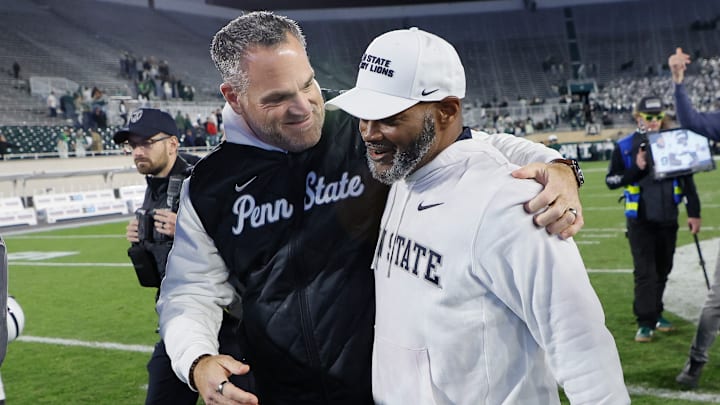
Donkoh begins his endorsement not with strategy, schemes, or tactical decisions, but with something far more personal: effort. “He is an extraordinary hard worker,” Donkoh said, emphasizing it again as if one repetition wasn’t enough to fully capture what he meant. Smith, according to the players, isn’t merely present—he is invested. He pours energy, time, and focus into his athletes in a way that is impossible to overlook. He is there early, he is there late, and he is there in all the moments in between, listening, watching, and connecting.
One of the qualities Donkoh highlighted most was Smith’s willingness to listen to player feedback. This may sound small, even routine, but within the hierarchical world of major college athletics, it’s anything but ordinary. Many coaches hear their players—far fewer truly listen. And even fewer take that feedback, internalize it, and translate it into real, visible change. For Donkoh, this is what separates Smith. When players speak, Smith doesn’t nod politely. He responds, adapts, and adjusts, building an environment where athletes feel not only valued but heard.
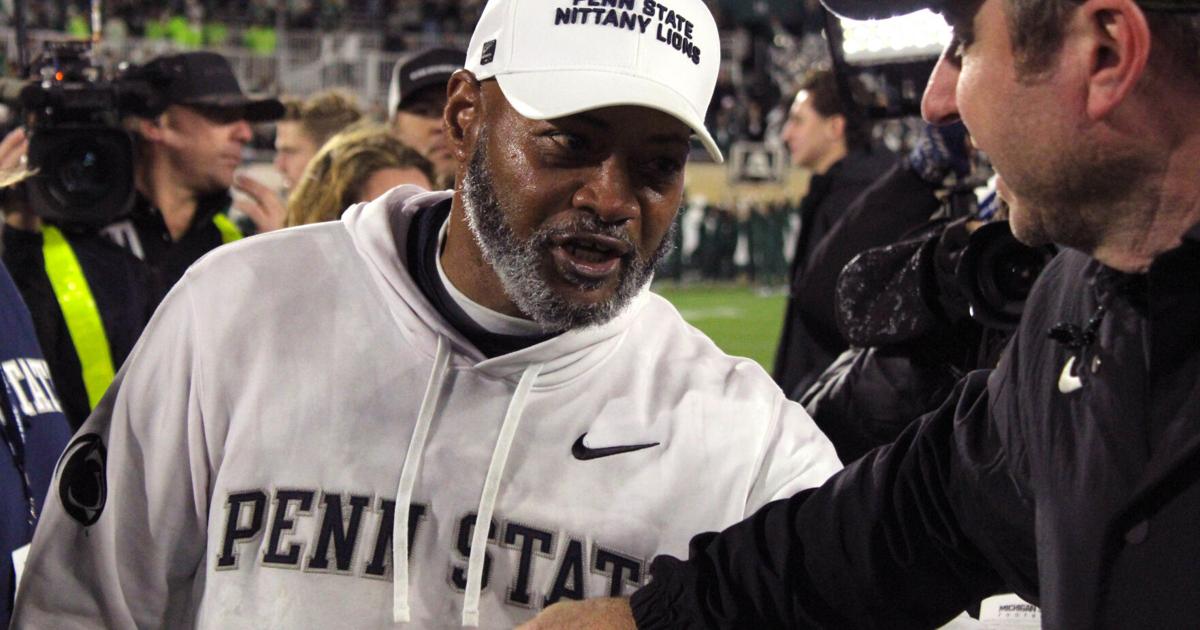
Beyond his work ethic and openness, Smith holds a powerful symbolic position at Penn State. He is, as Donkoh phrased it, “a Penn State blue blood.” He is part of the university’s DNA. An alumnus who lived the history, breathed the legacy, and understands the traditions that define the program. For older fans, for alumni, and for players who feel the weight of that blue-and-white pride, this matters deeply. It’s not just about knowing the program—it’s about being woven into it.
Yet Donkoh made it clear that Smith’s résumé is not what moves him most. It is Smith’s humanity. “He’s an amazing human being first and foremost,” he emphasized. And when players speak this way—not about schemes, but about character—it reveals something rare in modern collegiate sports. In a landscape increasingly defined by transfers, NIL deals, and business-like decision-making, Penn State’s players are asking for a leader who reminds them what the sport is supposed to feel like.
Perhaps the most powerful part of Donkoh’s message was his discussion of culture. “He would keep the Penn State culture, that family culture,” he said. These words carry enormous weight. In a time when many programs across the country are shifting toward corporate structures—treating players like assets and seasons like transactions—the Penn State locker room is openly fighting to protect what they believe makes their program special. They don’t want a CEO in a headset; they want a leader who knows their names, their struggles, their strengths, and their stories.
For Donkoh and many of his teammates, Smith represents continuity, stability, and heart. He represents a version of Penn State football that prioritizes relationships over revenue and unity over pressure. He represents a culture where players aren’t just athletes but family members. And to the men who put on the uniform every Saturday, that matters more than anything.
Player-driven advocacy for a coach is not unheard of, but it is rare for it to be this emotional, this unified, and this public. It speaks not only to Smith’s influence but to a deeper shift happening at Penn State—one where the players are claiming ownership of their future. They see in Smith someone who honors their past, understands their present, and cares about their growth beyond football.

Whether or not the university ultimately names Terry Smith the permanent head coach remains to be seen. But one thing is clear: the players have made their voices impossible to ignore. And in a sport filled with noise, their message stands out for its clarity and sincerity.
If Penn State chooses to follow the heart of its locker room, it may discover that the culture its players so fiercely defend is not merely worth preserving—it may be the key to building something even greater.