You can learn a lot about a football team by watching the sideline when the cameras aren’t focused on it. You see who the players run to after a big play, who they look at during moments of chaos, and who commands the kind of respect that can’t be forced or fabricated. And lately, when you watch Penn State, one thing becomes unmistakably clear: these players love Terry Smith.
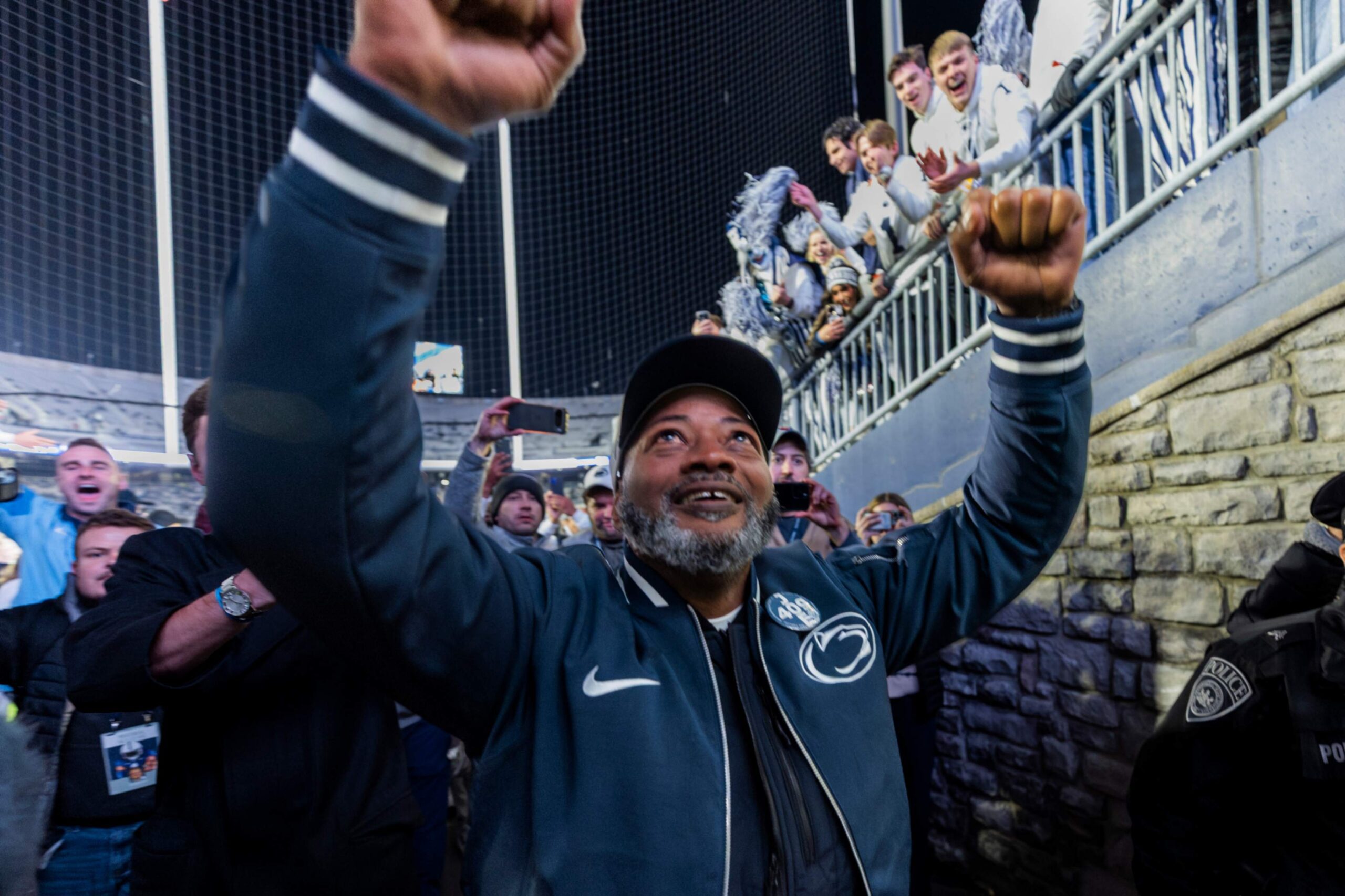
It’s not a polite, surface-level kind of respect. It’s deeper—visible in the way they stand taller around him, play harder for him, and trust him in a way that goes beyond any interim title printed on a press release. This team has rallied around him with a level of unity and belief that even the most experienced head coaches struggle to earn. Terry Smith didn’t ask for that devotion. He earned it.
Stepping into a midseason leadership crisis is one of the most difficult challenges in college football. The timing is terrible, the pressure is overwhelming, and the margin for error disappears overnight. Yet when Smith took over, he didn’t just steady the program—he reignited it. Suddenly, Penn State looked different. The sideline had life again. The players carried themselves with purpose, their energy sharper, their communication cleaner, their confidence restored.

Watch their body language. You’ll see it every game. Players gather around him after defensive stops. Offensive guys dap him up like he’s been leading them for years. Veterans walk beside him like he’s someone they’ve always trusted. Young guys look at him like he’s the coach who actually sees them. That kind of presence can’t be coached. It’s something that comes from authenticity, consistency, and connection.
And the connection is undeniable.
The energy under Smith isn’t just louder—it’s lighter. It’s freer. The players look like they’re playing for something again, not just through something. They look like a team that believes, not a team trying to survive. And in college football, belief changes everything.
The way Penn State has played under him reflects that belief. The execution has tightened. The toughness has sharpened. The effort snaps off the screen. There’s a sense of urgency that wasn’t there before, a commitment to each other that runs deeper than schemes or scoreboards. When a team starts playing with their hearts again, you can feel it. And right now, Penn State is playing with its heart fully exposed.
Look at the crowd, too. Beaver Stadium—one of the most passionate environments in college football—has begun chanting his name. Fans sense what the players feel. They see the shift in energy, the reawakened fight, the sideline swagger that had been missing. They see a leader who didn’t hesitate when the moment arrived, a man who took chaos and built cohesion.
That’s not luck. That’s leadership.
Terry Smith has done what great coaches do: he made the team believe again. Belief is the foundation of culture. Belief drives effort. Belief restores identity. And Penn State’s identity, under Smith, feels reborn.
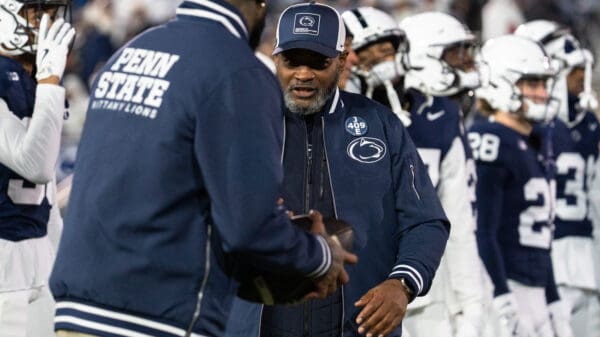
Now comes the pivotal question—the one fans, analysts, and administrators will soon have to face: What happens if Penn State wins out? What happens if the momentum continues? What happens if the team keeps improving under him, keeps fighting for him, keeps responding to him in a way that is impossible to dismiss?
The answer starts to feel simple.
If the players keep playing like this, if the stadium keeps sounding like this, if the energy keeps building the way it has since Smith took over, then the conversation shifts from “Who should Penn State hire?” to “Why look anywhere else?”
Because sometimes the right coach isn’t the one with national buzz or headline hype. Sometimes the right coach is the one your players already trust, the one your fans already believe in, the one who stepped into the hardest moment of the season and turned it into hope.
Terry Smith has earned that locker room. He’s earned that sideline. And if Penn State finishes the fight the way they’ve been playing under him, he may have also earned the job.
Not by campaigning.
Not by promising.
But by leading.