The tragic fire in Tai Po, Hong Kong, has now claimed dozens of lives and left hundreds of residents unaccounted for, marking one of the darkest and most devastating disasters the city has witnessed in decades. What began as a small fire spreading along renovation scaffolding quickly escalated into a full-blown catastrophe, engulfing multiple apartment towers in Wang Fuk Court and trapping countless families inside their homes. As smoke filled the sky and flames tore through the buildings with terrifying speed, Hong Kong was thrust into a state of shock, grief, and disbelief.

According to early reports from authorities, the fire originated on the exterior of one of the buildings, where extensive renovation work was underway. The bamboo scaffolding, construction sheets, and other flammable materials created a vertical pathway that allowed the flames to climb rapidly from floor to floor. Within minutes, whole sections of the building façade were ablaze, sending thick black smoke billowing from windows and stairwells. Residents described scenes of chaos as alarms rang out, hallways filled with smoke, and people struggled to navigate dark passageways to escape.
The human impact of this disaster is staggering. Families have been torn apart, entire households have gone missing, and the emotional and psychological pain is immeasurable. Among the victims already identified are the wife and children of a former Cleveland Browns player — a deeply heartbreaking detail that has drawn international attention and sympathy. Their loss represents not only a personal tragedy but also a painful symbol of how suddenly life can change, how fragile safety can be, and how disaster does not discriminate.
Emergency crews worked tirelessly through the night, battling flames, collapsing scaffolding, and dangerously high temperatures as they attempted to reach those trapped inside.

Firefighters reported extreme difficulty navigating the burning structures as falling debris, melting materials, and smoke reduced visibility to nearly zero. Some residents were rescued from balconies; others were found unconscious in stairwells. Many, however, remain missing, with their families anxiously waiting for updates outside temporary shelters and local hospitals.
As investigations continue, Hong Kong authorities have arrested several individuals connected to the renovation project on suspicion of gross negligence. Early statements from officials suggest that the use of flammable external materials, combined with improper safety standards during renovation, may have significantly contributed to the rapid spread of the fire. The arrests have intensified public concern and anger, with many residents questioning why such materials were approved, why fire safety guidelines were not strictly enforced, and why a residential complex housing thousands of people was left so vulnerable.
This tragedy exposes deeper and long-standing weaknesses in Hong Kong’s building safety system. Many of the city’s older public housing estates — built decades ago — are undergoing renovation or structural upgrades. Yet in many cases, these projects rely on outdated materials, insufficient safety barriers, and temporary constructions that can become deadly hazards in the event of a fire. Experts have repeatedly warned that high-rise renovation work requires strict oversight, especially when scaffolding covers entire building exteriors and reduces ventilation, escape routes, and access for rescue teams.
The fire has reignited urgent conversations not only about fire safety regulations but also about accountability, transparency, and the human cost of cost-cutting practices. When a building houses thousands of families, safety should never be compromised. Renovation should never create new dangers. Residents should never have to fear the place they call home.
Across the city, the emotional impact is profound. Support centers have been set up to help displaced families, many of whom lost everything in the fire — their homes, belongings, and loved ones. Volunteers have poured in to donate supplies, food, blankets, and emotional support. Social workers and psychologists have begun working with survivors, many of whom are experiencing shock, trauma, and overwhelming grief.
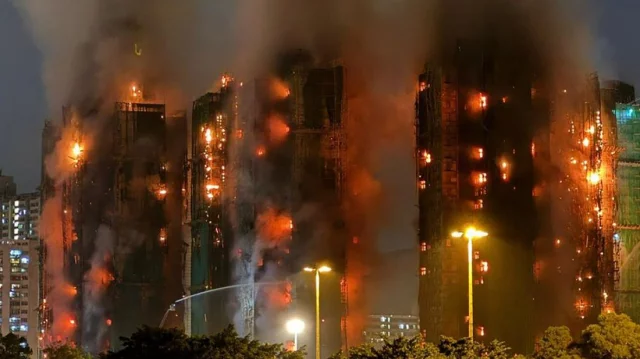
The world now watches Hong Kong with heavy hearts. The images of blazing towers, the sounds of desperate screams, and the sight of families holding photos of missing loved ones have sparked a global wave of sympathy and solidarity. Many international leaders and organizations have offered condolences and assistance, recognizing the scale of the disaster and the long road to recovery that lies ahead.
This tragic event highlights a painful truth: fire safety standards — especially during building renovations — must be strictly enforced, without compromise. Buildings should never become death traps. Lives should never be endangered by negligence, flawed construction choices, or outdated policies. Hong Kong, a city known for its modern skyline and advanced infrastructure, must confront the weaknesses that this disaster has exposed.
As investigations unfold and the search for the missing continues, one thing is clear: this tragedy must lead to real change. Accountability must be pursued. Regulations must be strengthened. And the voices of the victims and survivors must be heard.
For now, our thoughts remain with the victims, the missing, and all families affected. May those lost be remembered with dignity, may survivors receive the support they desperately need, and may Hong Kong find the strength to heal — and to ensure that such a disaster never happens again.