There are games that end on the scoreboard, and there are games that continue long after the stadium empties. Penn State’s 40–36 victory over Rutgers belonged firmly to the second category. What unfolded on that field wasn’t just a contest of strength and execution — it became a referendum on character, culture, and the future of college football itself.

In the hours that followed, commentary poured in from all directions. Fans debated, analysts speculated, and social media erupted with theories and slow-motion clips that tried to dissect every hit and every call. But among the noise, one thing stood out with clarity: Penn State’s players walked into this game with discipline and walked out with dignity intact — something that not everyone on the opposing sideline managed to do.
The spark that set the post-game firestorm ablaze came when a member of the opposing staff implied that Penn State had crossed physical or ethical lines during the game. It was the kind of claim that doesn’t just bruise pride — it threatens legacy. Yet those who watched closely, who saw the grit and technique on every Penn State snap, knew the truth: this was football played the right way.
No one felt that truth more strongly than offensive lineman Anthony Donkoh, who had spent the days prior advocating fiercely for Terry Smith to be named Penn State’s permanent head coach. His words weren’t just supportive — they were testament to a man who had poured heart and soul into the program.

“He is an extraordinary hard worker,” Donkoh had said. “He pours so much energy into us. He wants our feedback, he listens, he adapts, and he makes the changes that matter.” That level of trust doesn’t come from speeches. It comes from daily consistency, humility, and a coach who stands beside his players, not above them.
Smith, a Penn State alum and a figure deeply rooted in the program’s tradition, has long been seen as a bridge between eras — someone who honors the past while guiding the present. Donkoh captured this perfectly: “He would keep the Penn State family culture alive, not turn it into the cold business operation that so many programs have become.”
Those comments resonated deeply when the accusations from the opposing side surfaced. Because nothing could be further from the truth than the idea that Smith or his players would compromise integrity for a win. Penn State didn’t just fight hard — they fought clean. They fought with purpose. They fought with an identity forged through accountability and unity.
The reactions after the game told their own story. While the Nittany Lions celebrated with pride but composure, the opposing sideline let frustration spill into taunts and subtle mockery. It wasn’t passion — it was bitterness. And in college football, bitterness often speaks louder than reason.
Penn State’s interim leadership understood that dynamic well. Their post-game statement didn’t come from anger — it came from disappointment. Not in their own performance, but in the sport’s shifting culture. In recent years, the line between competitive fire and public character assassination has blurred, and this game was a perfect example.
In truth, the accusations weren’t about player safety or fairness. They were an attempt to rewrite a loss. When a team loses a close, emotional matchup, the sting cuts deep. But deflecting blame — especially through the media — is an approach that corrodes credibility. College football thrives on respect, even in defeat. Without it, the sport becomes hollow.
Yet Penn State refused to be dragged into that narrative. Their message was simple: their win was earned, their character was intact, and no external noise could take that away. Instead of pointing fingers, they pointed to the game film — a reflection of effort, execution, and sportsmanship.
Still, the controversy raises an uncomfortable question for the Big Ten Conference: how long will unsubstantiated accusations be allowed to overshadow actual performance? When conferences preach integrity but allow narratives built on frustration to dominate headlines, the players suffer most. They work too hard, sacrifice too much, and carry too much pressure to have their reputations damaged for someone else’s convenience.
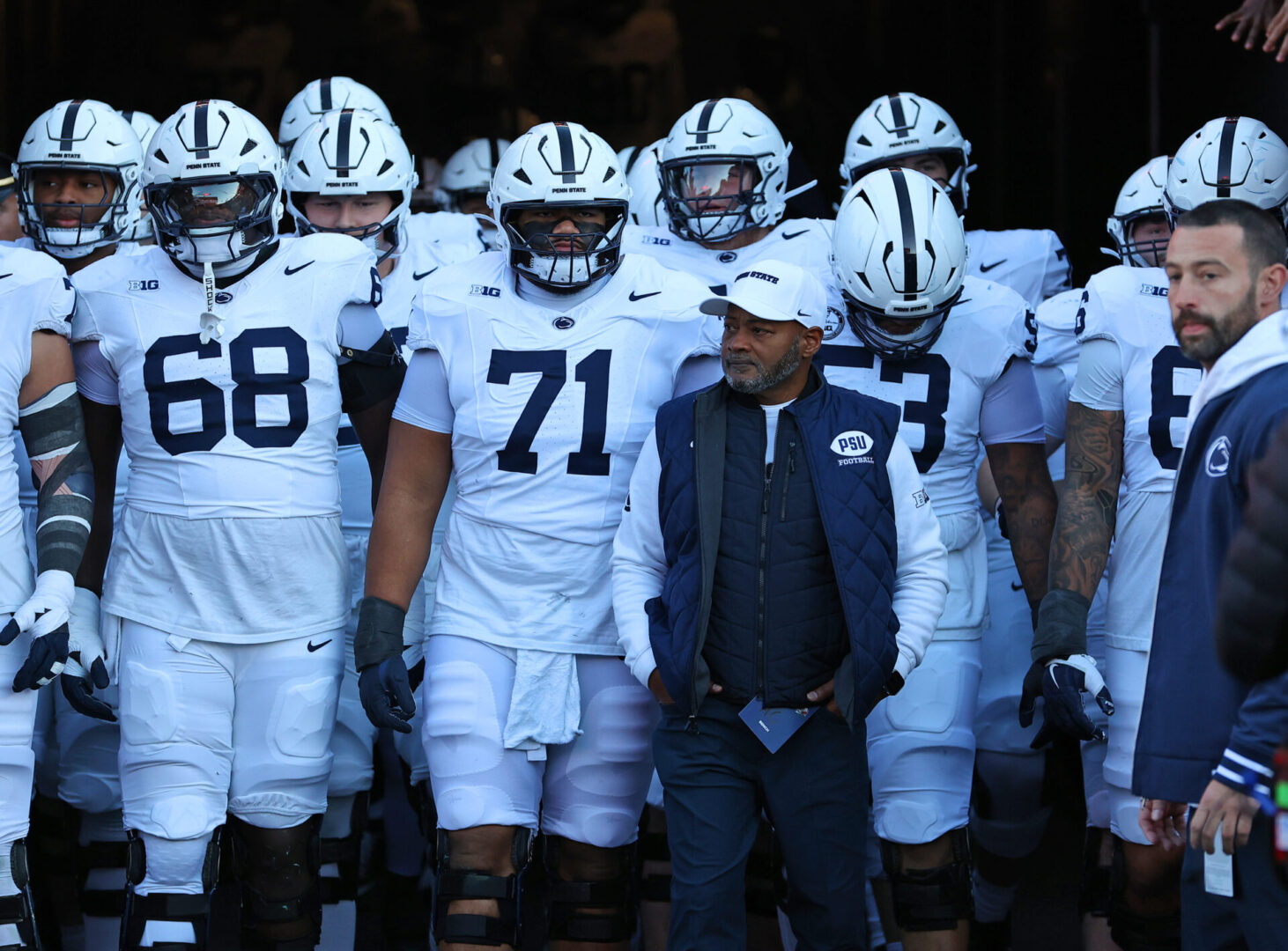
Penn State’s victory should have been a celebration. And in many ways, it still is. It proved the team’s resilience. It highlighted Terry Smith’s leadership. It showed why players like Donkoh believe so deeply in the man guiding them. But the shadow of accusation serves as a reminder of what college football risks becoming if accountability isn’t enforced evenly.
In the end, the Nittany Lions didn’t just win a game — they won a battle for identity. They stood tall, refused to fire back, and let their conduct speak louder than any press conference rant. And as the debate continues to swirl, one truth remains unshaken: Penn State’s pride, discipline, and integrity were never in question.