The explosive video that has Washington holding its breath
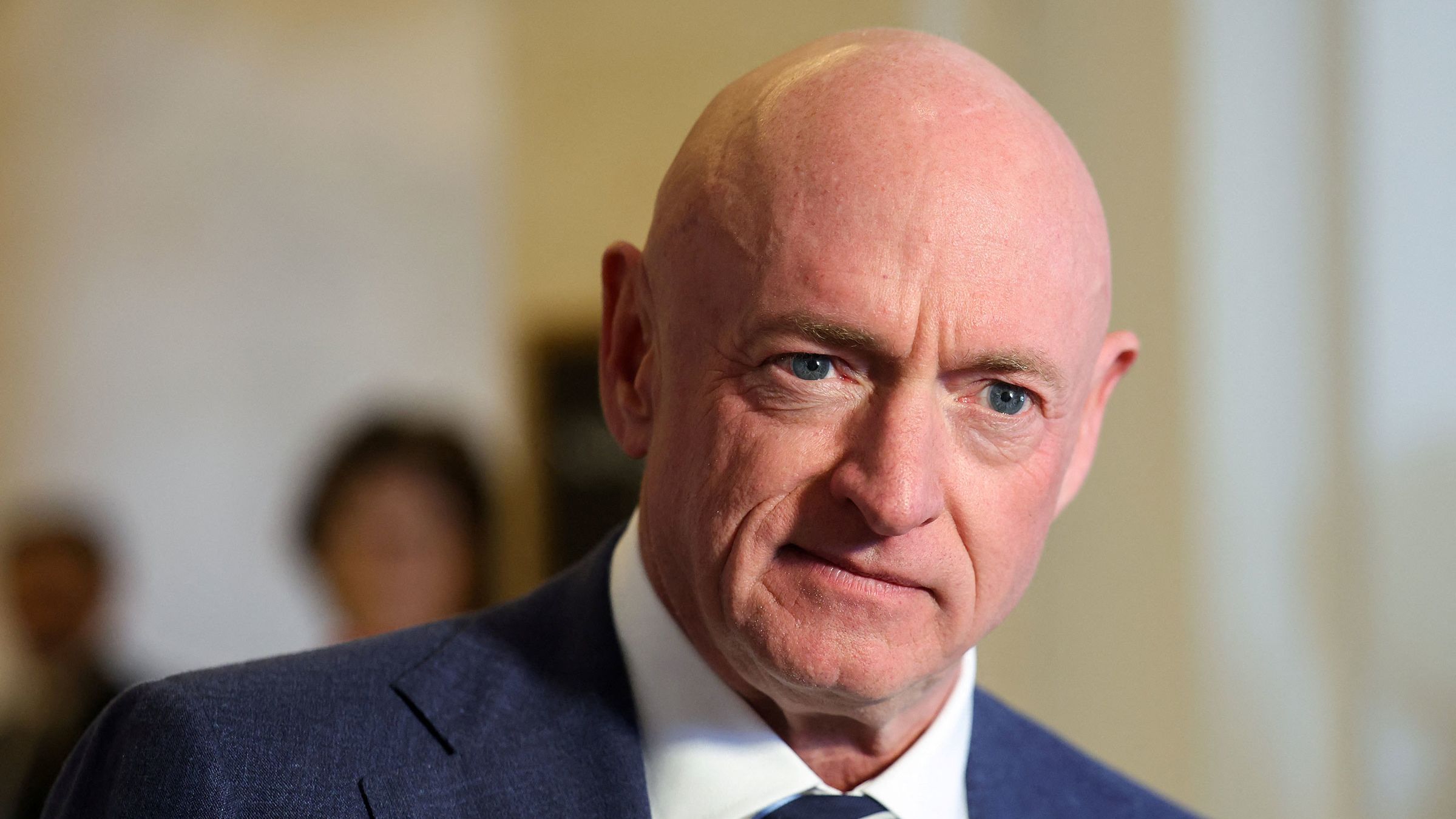
Washington, D.C. is no stranger to controversy, but nothing in recent memory has electrified the nation like the storm ignited this week over Sen. Mark Kelly (D-AZ). The Pentagon’s decision to launch a formal investigation into Kelly, and the White House’s public backing of it, has sent shockwaves through Capitol Hill, the military, and social media alike.
The catalyst? A short, yet incendiary video in which Kelly appeared alongside a group of Democratic lawmakers, urging U.S. service members to refuse unlawful orders. In a city already consumed by political tension, this footage lit a fuse, turning what might have been a quiet ethical debate into a full-blown national firestorm.

THE VIDEO THAT SHOOK THE NATION
The video, now trending across multiple platforms, shows Kelly calmly addressing the camera while discussing constitutional duty, emphasizing that service members must never follow orders that violate U.S. law. While some view it as a reminder of civic responsibility, others perceive it as a direct challenge to military authority.
Inside the Pentagon, sources report, the reaction was immediate and intense. Officials convened an emergency review, ultimately deciding to open a formal investigation into Kelly’s actions. The White House quickly signaled full support, citing concerns about “maintaining order, discipline, and the chain of command in the armed forces.”
“The implications of this video are serious,” said a senior White House official speaking on background. “We cannot have actions that could compromise our military readiness or morale.”

A POLITICAL FIRESTORM
Washington’s political class erupted in response. Republicans have called Kelly’s remarks “reckless” and “borderline insubordination,” demanding swift action to reaffirm the sanctity of the chain of command. Democrats, meanwhile, have accused the Pentagon and the White House of weaponizing military authority for political purposes.
At the Capitol, whispers of a constitutional crisis are growing louder. Legal scholars point out that the investigation treads on highly sensitive ground: a sitting senator, a former military officer, now subject to scrutiny by the military branch he once served. Questions swirl: Can a civilian senator be held accountable under military law for statements made in public? Does this set a dangerous precedent for the separation of powers?
For Kelly, the pressure is intense. The senator has insisted that his comments merely remind service members of their constitutional duty: to refuse illegal orders. “I’m not asking anyone to break the law,” Kelly told reporters. “I’m asking them to uphold it.”
MILITARY AND LEGAL IMPLICATIONS
The Pentagon investigation is unprecedented in its scope. Analysts suggest it could involve interviews with retired and active-duty military personnel, a review of Kelly’s service record, and examination of whether his statements could be considered a threat to military cohesion.
Some former JAG officers have expressed concern, noting that the UCMJ (Uniform Code of Military Justice) is typically applied to active-duty personnel. Applying it to a civilian legislator could ignite a constitutional crisis. “This is uncharted territory,” one former military lawyer said. “We’re talking about balancing free speech, legislative immunity, and military authority — all under extraordinary public scrutiny.”
Meanwhile, social media is ablaze. Twitter, Threads, and X-Platform feeds are flooded with hashtags like #MarkKellyInvestigation, #PentagonProbe, #MilitaryVsCongress, and #ChainOfCommandChaos. Public debate ranges from admiration for Kelly’s courage to outrage over his perceived recklessness.

WASHINGTON HOLDS ITS BREATH
As the investigation proceeds, Washington is paralyzed in a mix of fear, curiosity, and speculation. Politicians, military officials, and journalists are all waiting to see the next move. Will Kelly face disciplinary action? Could there be hearings or even legal challenges? Will the Pentagon’s decision embolden future interventions in matters traditionally reserved for civilian oversight?
Meanwhile, ordinary Americans are watching closely. The stakes feel immense: a former astronaut, a senator, and a retired officer under investigation by the institution he once served, all while the nation grapples with questions about loyalty, constitutional duty, and the limits of free speech.
For some, Kelly is a hero reminding the country of the Constitution. For others, he is a provocateur, destabilizing norms that have guided military service for decades. Whatever the perspective, one thing is undeniable: this story is far from over.
WHAT COMES NEXT
Legal teams on both sides are reportedly preparing for an extended battle. Congress is bracing for inquiries. The media is preparing round-the-clock coverage. And the Pentagon has promised transparency — though insiders warn that the investigation could take months.
In a city where political drama is the norm, few stories have had the intensity of this confrontation. The combination of a sitting senator, the military, and the executive branch has created a perfect storm — a narrative that will dominate headlines, cable news, and social media threads for the foreseeable future.
The nation waits, divided and enthralled, as the investigation unfolds. Every statement, every tweet, every press briefing could tip the balance in this high-stakes game of power, law, and loyalty.