Critics are blasting Speaker Mike Johnson after he swiftly administered the oath to newly elected Matt Van Epps within 48 hours of his special-election win — while he stalled the swearing-in of Adelita Grijalva, a Democrat, for nearly seven weeks. The contrasting treatment has sparked accusations of blatant partisan favoritism and provoked legal, political, and public backlash. Yahoo+3BostonGlobe.com+3AP News+3

🕒 The Two Timelines
-
Grijalva won her special election on September 23, 2025, to fill the seat previously held by her late father. But she was not sworn in until November 12, after a nearly 50-day delay — by which time over 800,000 constituents had gone without full representation in Congress. The Washington Post+2The Guardian+2
-
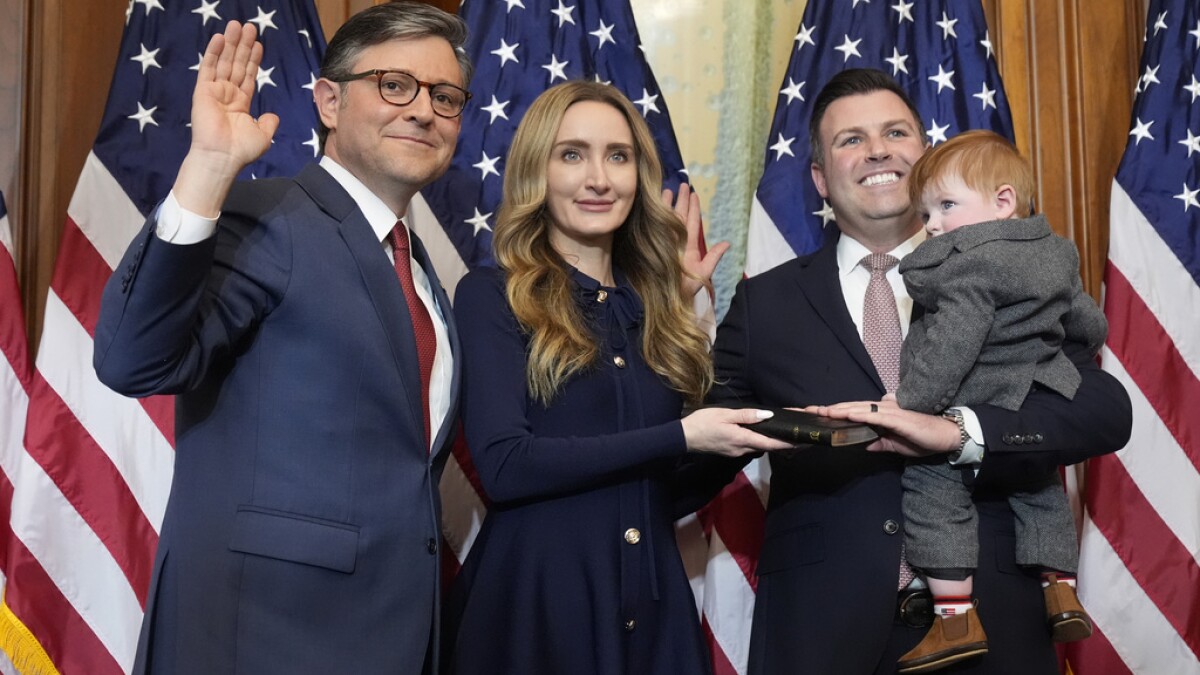
Meanwhile, Van Epps, a Republican, was sworn in under two days after his election — a speed many saw as unusually fast. AP News+2Yahoo+2
This stark contrast has led many to question whether the delay for Grijalva was a simple procedural lag — or a strategic move.
⚠️ Legal Threats & Accusations of Undermining Democracy
The delay prompted the state’s top law-enforcement official, Kris Mayes, Arizona’s Attorney General, to file a lawsuit demanding that Grijalva be sworn in without further delay. The suit argues that the delay deprived her constituents of representation and potentially violated constitutional principles. CBS News+1
Grijalva and her supporters have called the delay “an abuse of power.” In her first floor speech after finally being sworn in, she condemned using a single individual’s discretion to block the people’s choice. The Washington Post+2The Guardian+2
Supporters also note that earlier this year, two Republicans were sworn in during pro forma sessions — even when the House was technically not in full session — yet Johnson refused the same for Grijalva. The Guardian+2Democrats+2
🔎 Why Many See It As More Than Coincidence
Many observers argue that this was not mere scheduling or bureaucratic delay — it looks calculated. The timing of Grijalva’s delayed swearing-in coincided with efforts to gather enough signatures on a discharge petition that would force a vote to release sealed files related to convicted sex offender Jeffrey Epstein. Grijalva’s signature was considered pivotal for reaching the required threshold. The Guardian+2Democracy Now!+2
Johnson has disputed the accusation, saying the delay was due to the ongoing government shutdown and a lack of “regular session.” Newsweek+2Washington Examiner+2 But critics point out that earlier in 2025, he had sworn in other members under similar conditions. The Guardian+2Democrats+2

📣 Public Outrage, Political Fallout, and Erosion of Trust
Democrats, state officials, and civic groups have accused Johnson of undermining democratic principles — that when voters cast their ballots, their choice should be honored swiftly and fairly. By allowing unequal treatment of incoming lawmakers based on party affiliation, critics argue, Johnson is eroding public trust in Congress. The Guardian+2democraticwomenscaucus.house.gov+2
Grijalva’s supporters pointed out that hundreds of thousands of Arizona residents were effectively left voiceless during the delay. The Guardian+2The Washington Post+2
Even some Republicans reportedly expressed discomfort with the optics of the delay, given Congress’s own earlier precedents of much faster swearing-ins. The Washington Post+2The Guardian+2
Across social media and political commentary, many framed the contrast bluntly: “Less than 48 hours after winning… must be nice.” Mediaite+1

🧩 What’s at Stake: Representation, Precedent, and Public Confidence
-
Representation for constituents: For nearly two months, Grijalva’s district lacked a fully seated representative — a gap critics say is unacceptable.
-
Precedent for fair treatment: If swearing-in procedures can be accelerated or delayed at the Speaker’s discretion based on politics, it undermines the ideal of impartial governance.
-
Public confidence in institutions: Many Americans now question whether elected offices and congressional procedures serve the public or partisan advantage.
For many, this episode isn’t just about one seat — it’s about the integrity of representation itself, and ensuring that when voters go to the polls, their votes — and their voices — actually count.