College football is built on moments — highlight plays, signature wins, unforgettable performances. But sometimes, the loudest moment is the one that never happens.
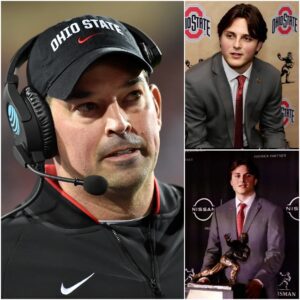
This season, Julian Sayin didn’t just play quarterback for Ohio State. He orchestrated something close to perfection.
Week after week, he delivered performances that felt surgical. The ball came out on time. Decisions were instantaneous. Pressure didn’t rattle him — it sharpened him. Defenses adjusted. He adjusted faster.
By the end of the regular season, the numbers told a story that usually ends with a trophy: the nation’s best completion percentage, an elite passer rating, and a flawless regular-season record. Ohio State didn’t just win — it controlled games. And Sayin was the constant.
Quietly dominant. Ruthlessly efficient.

Yet when the Heisman results were announced, Julian Sayin finished fourth.
Not second.
Not third.
Fourth.
The reaction across the college football world was immediate — and emotional. Social media flooded with disbelief. Former players asked the question fans couldn’t stop repeating: How does perfection finish fourth?
To some voters, the explanation was simple. Ohio State’s loss in the Big Ten title game lingered. Others leaned into narratives — dramatic comeback stories, jaw-dropping athleticism, or media-driven momentum that builds week by week until it becomes unavoidable.
But that explanation didn’t sit well with Buckeye Nation.
Because Sayin didn’t disappear in big moments. He didn’t crumble. He didn’t regress. His performance remained steady, controlled, elite — even when the spotlight burned hottest.
The uncomfortable truth began to surface: sometimes excellence is too quiet to compete with chaos.
Julian Sayin didn’t deliver viral celebrations or theatrical soundbites. He didn’t chase headlines. He just executed. Over and over again.
And in a sport increasingly shaped by storylines, that may have worked against him.
Analysts began breaking down the vote. Some pointed to voter fatigue with Ohio State quarterbacks. Others suggested conference bias. A few admitted — off the record — that Sayin’s consistency didn’t create the emotional spikes that sway ballots.
That’s the irony.
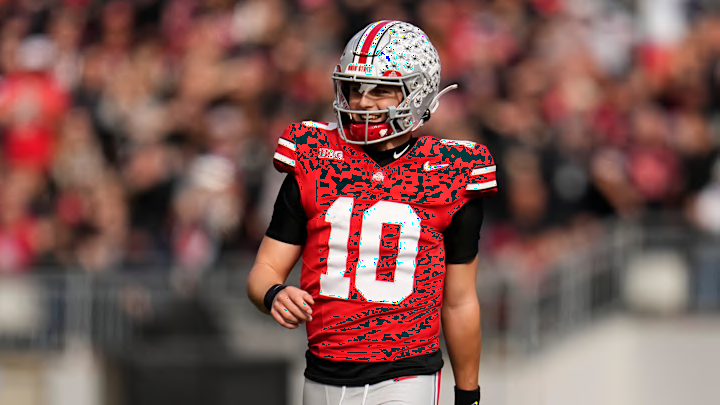
The very thing that made him great — stability — may have made him invisible.
Yes, trophies don’t define careers. The College Football Playoff matters more. Championships matter more. Julian Sayin himself has said all the right things, refusing to frame the result as a slight.
But moments like this don’t fade easily.
Because the Heisman Trophy is supposed to honor the most outstanding player in college football — not the loudest narrative, not the most dramatic arc, not the trend of the moment.
And when a quarterback leads a powerhouse program to perfection with historic efficiency and still finishes fourth, it forces the sport to ask uncomfortable questions.
Was the voting process flawed?
Did consistency get undervalued?
Or did college football simply miss what was right in front of it?
For Julian Sayin, the season will be remembered for wins, records, and leadership. For Ohio State fans, it will also be remembered for what didn’t happen — a moment they believed was inevitable.
The silence when his name was called fourth wasn’t just disappointment.
It was disbelief.
And years from now, when people look back at the numbers, the tape, and the results, one question will still echo through Buckeye Nation:
How did that season not win the Heisman?