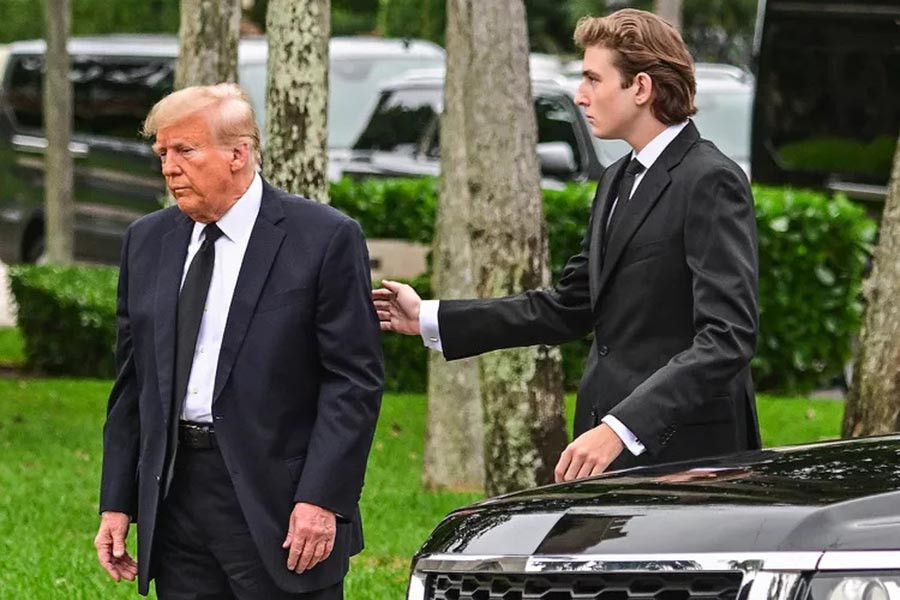
According to statements now circulating across multiple media platforms, Barron Trump — the youngest son of former President Donald Trump — reportedly interacted last year with controversial internet personality Andrew Tate. The claim originated from comments made by Justin Waller, an entrepreneur and known associate of Andrew and Tristan Tate.
Waller told reporters that Barron had expressed admiration for Tate and that the two had spoken directly. While no recordings, transcripts, or direct confirmations from Barron Trump have been presented, the mere suggestion was enough to ignite a political and cultural firestorm.
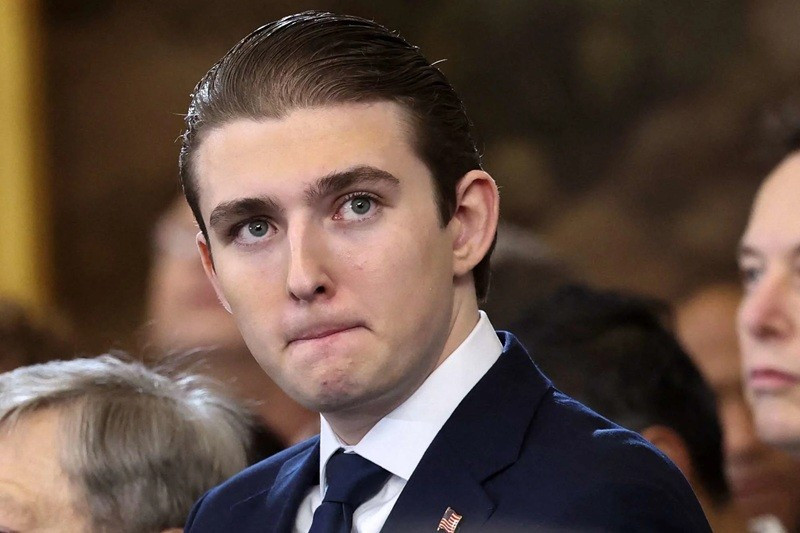
Andrew Tate, a polarizing figure with a massive online following, has long been surrounded by legal challenges, accusations, and intense criticism. Any rumored association with him — particularly involving a high-profile political family — was bound to draw immediate scrutiny.
Waller further described himself as a close ally within the Tate inner circle, at one point referring to himself as a “third brother.” He also suggested that he served as an older guiding presence to Barron during the alleged interaction — a statement that only intensified public concern.
Within hours, commentators began drawing connections between these claims and recent political discussions involving the Tate brothers, questioning whether personal relationships could have influenced public or legal narratives behind the scenes.
Supporters of the Trump family were quick to push back. Many dismissed the story as exaggerated, unverified, or irresponsibly amplified by media outlets hungry for clicks. Others pointed out that Barron Trump is a young adult with no public record of political or ideological positions — and that casual or indirect contact does not imply endorsement.
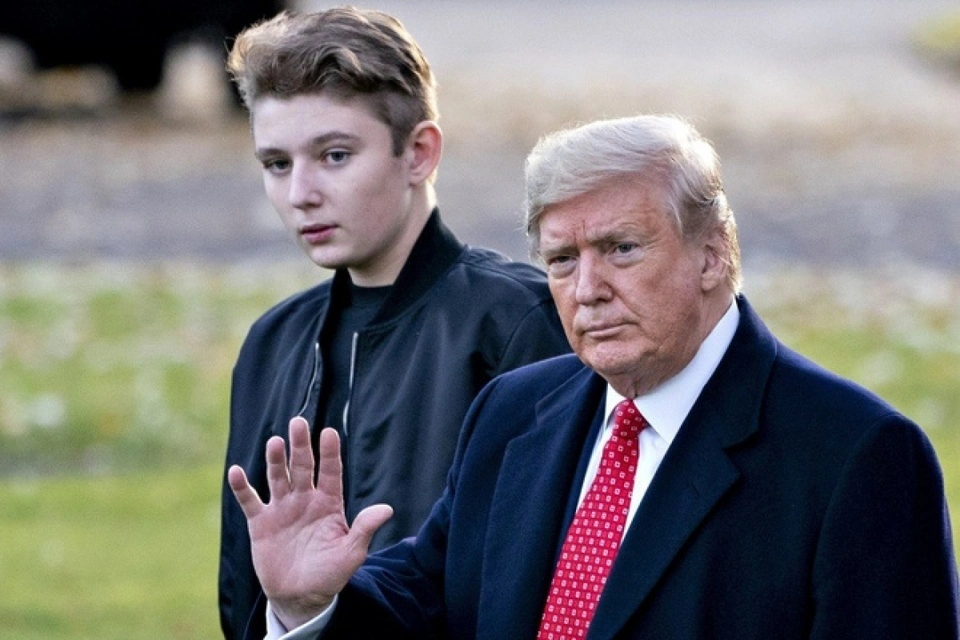
Critics, however, argue that the implications cannot be brushed aside so easily. They say the situation highlights the risks of unexamined influence, particularly when powerful families, controversial figures, and private conversations intersect beyond public accountability.
Notably, neither Barron Trump nor representatives for the Trump family have issued any formal response to the claims. Andrew Tate himself has not publicly confirmed or denied the alleged interaction.
That silence has only fueled further debate.
Some analysts warn that the real issue may not be whether the interaction occurred, but how quickly unverified claims can reshape public perception — especially when attached to a name already surrounded by political symbolism.
Others caution against turning rumor into narrative, reminding audiences that second-hand statements are not evidence — and that the digital age has blurred the line between reporting and speculation.
One truth remains undeniable:
This story reopened questions about influence, proximity, and power — questions no one expected to be asking about a 19-year-old who has spent most of his life avoiding the spotlight.
And as long as the answers remain unclear, the conversation isn’t ending anytime soon.