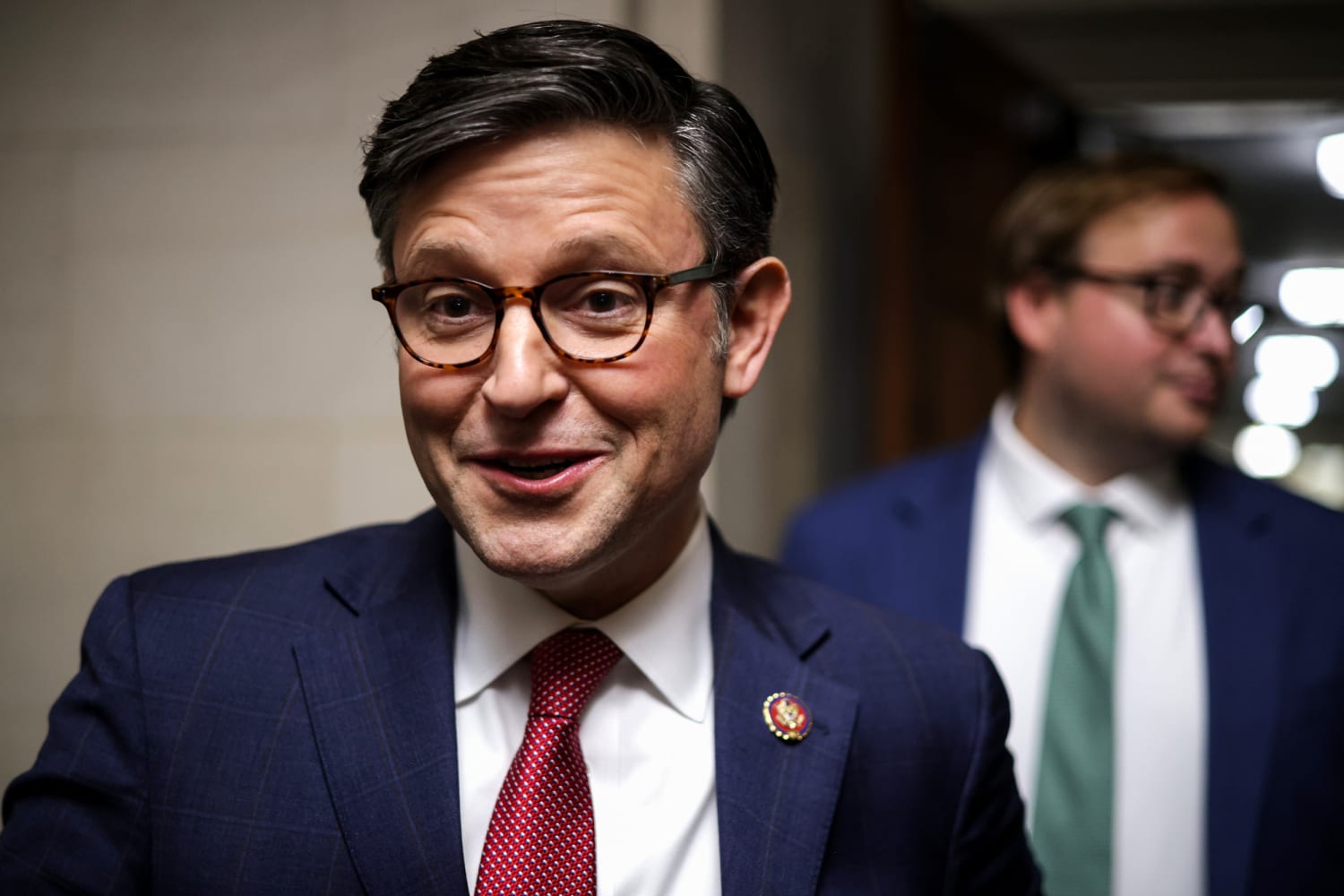
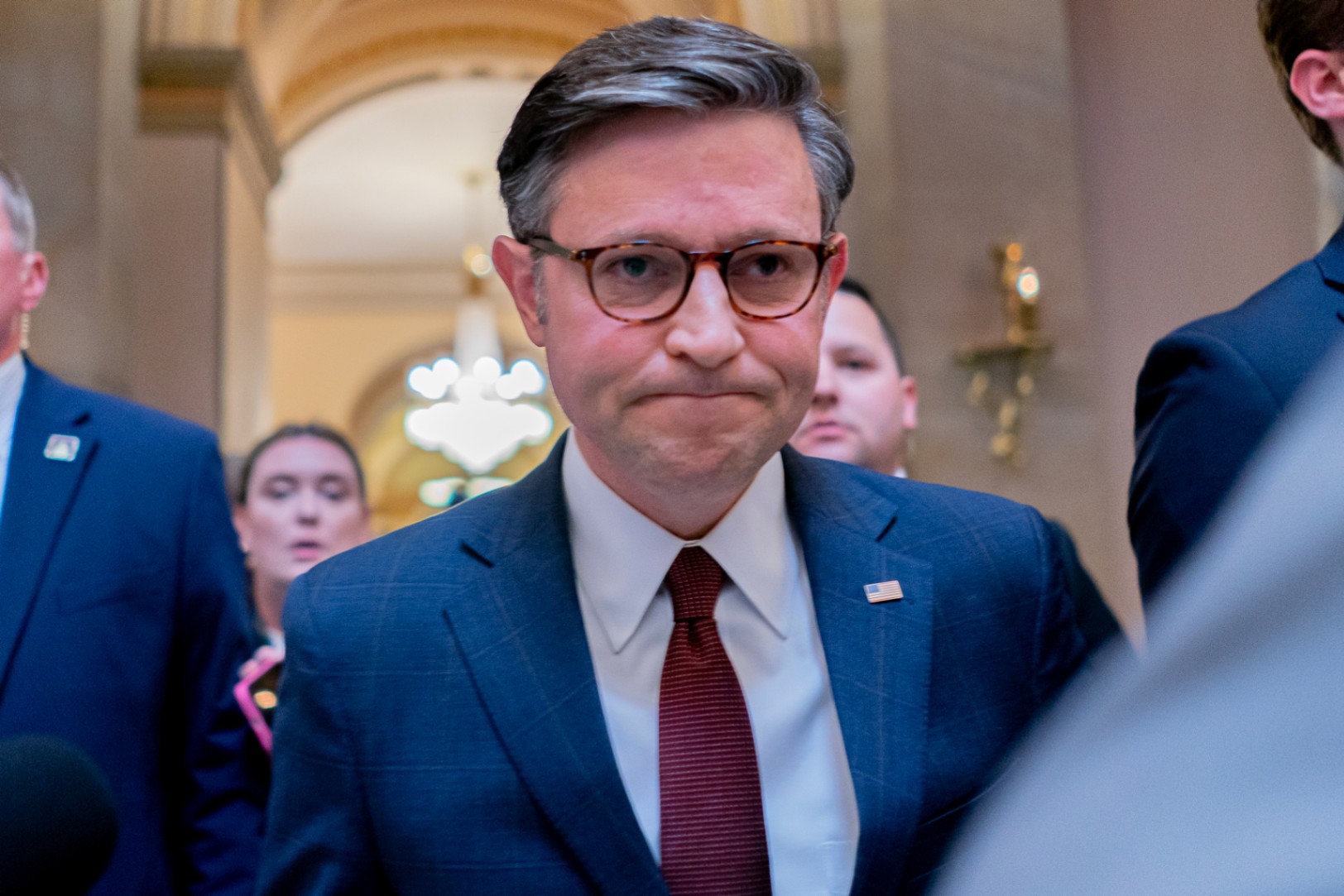
In a fiery statement that sent shockwaves through Washington, House Speaker Mike Johnson unleashed a scathing rebuke against Senate Majority Leader Chuck Schumer, accusing him of attempting to orchestrate a secret, backroom deal that would “betray the American people.”
The accusation came after reports surfaced that Schumer wanted only four lawmakers — himself, Johnson, President Biden, and Senate Minority Leader Mitch McConnell — to privately negotiate a sweeping government package away from public scrutiny.
Johnson’s response was immediate — and explosive.
“Schumer wants ONLY four people to go into a smoke-filled back room — in private, behind the backs of the American people — to cut some shady deal,” Johnson declared.
“That’s not how democracy works. That’s how corruption survives.”
A Tense Capitol Showdown
For weeks, tensions between the House and Senate have been building over government spending, border policy, and the national debt.
But this — Johnson’s direct, public challenge to Schumer — marks a new level of confrontation between two of Washington’s most powerful figures.
Schumer’s proposal, sources claim, was designed to “speed up” negotiations on a deal that could fund major domestic programs and international aid packages.
Johnson, however, saw it as something far darker: an attempt to shut out transparency, accountability, and the will of the American people.
“We will not allow Washington elites to decide the future of this country in secret,” Johnson said.
“Every American deserves to know how their money is being spent — and by whom.”
The Battle Over Transparency
This isn’t the first time the Speaker has drawn a hard line against closed-door negotiations.
Since taking office, Johnson has repeatedly vowed to “bring sunlight” to government processes that have long operated in the shadows.
His message is simple: if lawmakers are spending taxpayer money, taxpayers have the right to see it happen.
Analysts say Johnson’s bold stand taps into a deep public frustration — one that transcends party lines.
From both the left and the right, voters have grown weary of trillion-dollar bills pushed through Congress with little debate, little explanation, and even less transparency.
“Johnson is saying what millions of Americans feel,” one political strategist said.
“People are sick of deals being made at midnight, in secret, by people they never voted for.”
Schumer’s Camp Pushes Back
Of course, Schumer’s allies are pushing back — hard.
They argue that the “private meeting” proposal was simply an effort to streamline talks and avoid another government shutdown.
One Democratic aide called Johnson’s comments “reckless political theater,” claiming the Speaker was “more interested in headlines than solutions.”
But Johnson’s supporters say otherwise.
They see his refusal to play the Washington game as proof that he’s serious about reform.
“He’s not grandstanding — he’s drawing a line,” said one House Republican.
“For too long, these backroom deals have produced bloated bills and hidden agendas. Johnson’s saying, ‘No more.’”
The Smoke-Filled Room Problem
For decades, “smoke-filled room” has been shorthand for everything Americans distrust about politics — power brokers deciding the nation’s future in private, while citizens are left in the dark.
Johnson’s decision to invoke that phrase was no accident.
It was a deliberate strike — an image designed to remind the public that corruption thrives in secrecy.
“America wasn’t built in a back room,” Johnson said in his statement.
“It was built in the open — with debate, disagreement, and accountability.”
Public Reaction: “Finally, Someone Said It”
The response online was immediate and overwhelming.
Within hours, clips of Johnson’s statement went viral across social media platforms.
Supporters hailed him as “the only one willing to call it out,” while critics accused him of playing politics.
On X (formerly Twitter), one user wrote:
“Finally, someone said it! We’ve had enough of these secret meetings and half-truths. The government should belong to the people, not four men in a back room.”

Others, however, warned that Johnson’s stance could further stall negotiations — potentially leading to another budget standoff.
Still, for millions watching, the Speaker’s fiery words struck a chord.
The Stakes Couldn’t Be Higher
At the center of the dispute lies not just political tension, but a fundamental question about how democracy should work in the modern age.
Should major national decisions be hammered out quietly among a few power brokers — or debated openly for all to see?
For Johnson, the answer couldn’t be clearer.
He’s framing this fight not as a partisan battle, but as a moral one — between secrecy and transparency, between politics as usual and a new era of accountability.
“This isn’t about Democrats or Republicans,” he said.
“It’s about right and wrong. If you’re afraid of the American people seeing what you’re doing, then maybe you shouldn’t be doing it.”
A Clash That Could Shape 2025
Insiders say this confrontation may be only the beginning.
As government deadlines loom, the standoff between Johnson and Schumer could shape not only spending decisions but also the balance of power heading into 2025.
Whether this ends in compromise or crisis remains to be seen.
But one thing is clear — Mike Johnson isn’t backing down.
And in a city where compromise often looks like surrender, his refusal to play by the old rules might just redefine what leadership looks like in the post-Trump era.