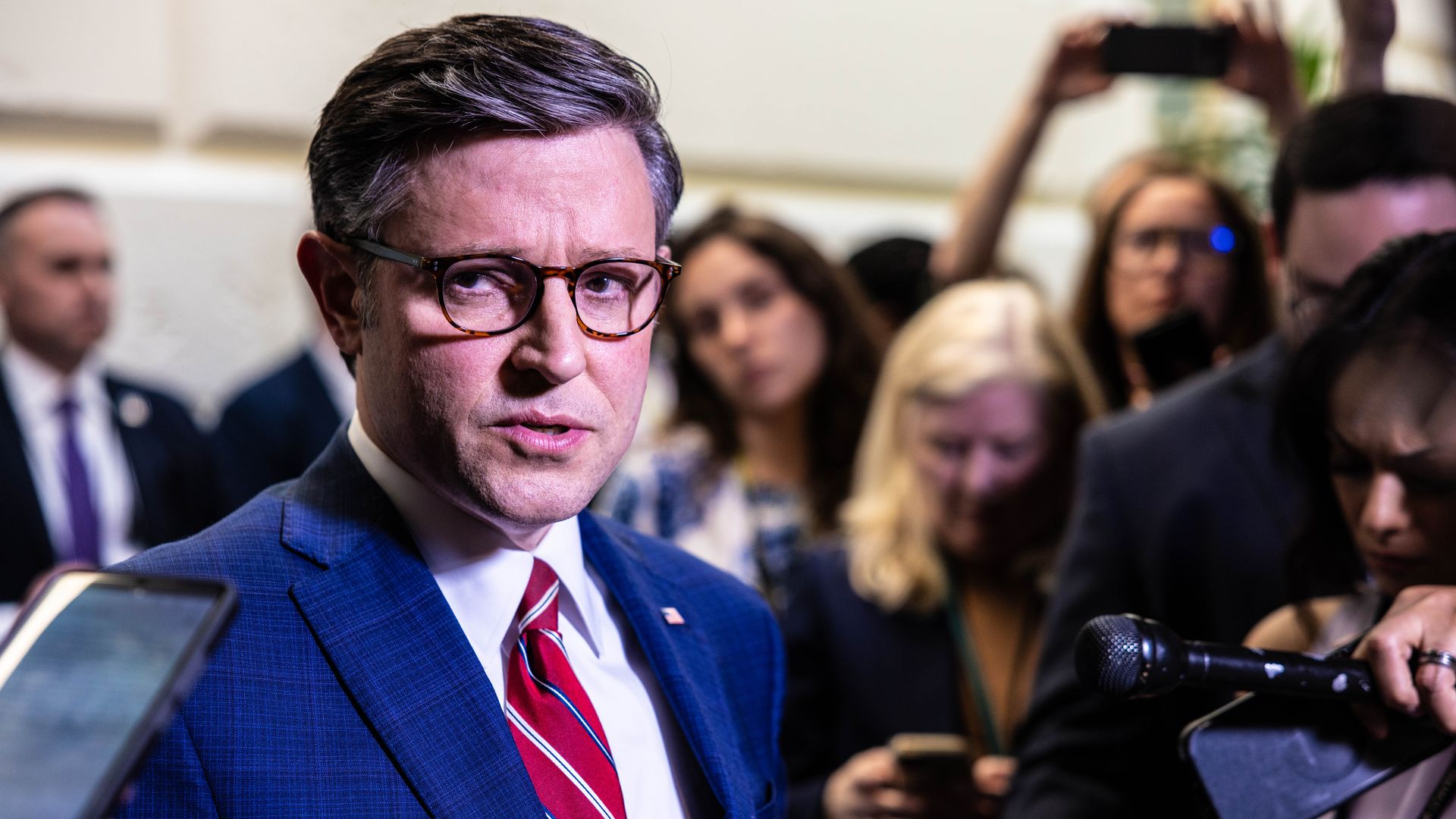
House Speaker Mike Johnson ignited fresh political controversy this week after alleging extensive fraud within the Affordable Care Act (ACA), commonly known as Obamacare, claiming the system has become what he described as a “fraud fest.”
Speaking during a public appearance, Johnson laid out a series of allegations centered on improper subsidy payments and weak verification standards. According to the Speaker, a review of Affordable Care Act subsidy applications revealed what he characterized as systemic failures in oversight and enforcement.
Johnson claimed that out of 24 allegedly fraudulent applications submitted for ACA subsidies, 23 were approved despite what he said were glaring red flags. He asserted that the applications lacked Social Security numbers, income verification, or proof of citizenship, yet still resulted in federal payments to insurance companies.

“There were no Social Security numbers provided, no verification of income or even citizenship,” Johnson said. “Tens of thousands of dollars paid to each one of those to the insurance companies for people that do not exist.”
The Speaker further alleged that taxpayer funds were paid on behalf of deceased individuals, stating that approximately $94 million in subsidies were issued for people who had already died. He also claimed that tens of thousands of Social Security numbers were used by multiple individuals in 2024, describing this as a method used to exploit the system.
“These are multiple people using one number to bilk the system and defraud it,” Johnson said, placing responsibility squarely on Democrats, whom he accused of creating and defending a “broken system.”
Johnson framed the allegations as central to the Republican message heading into the election cycle, arguing that rising healthcare costs are a direct result of what he described as Democratic mismanagement of the ACA.
“When we go forward with the truth,” Johnson said, “we explain to the American people the reason their costs are out of control is because they created a broken system. We have the solutions to fix it.”

Democrats Push Back
Democratic lawmakers quickly disputed Johnson’s claims, arguing that his remarks misrepresent both the scope of fraud within the ACA and existing safeguards. They point to multiple government audits over the years acknowledging improper payments while also emphasizing that fraud rates within the ACA remain a small percentage of total enrollment.
Several Democrats accused Johnson of conflating administrative errors with intentional fraud, a distinction often highlighted by health policy experts. They also noted that fraud exists in nearly every large federal program and that Republicans have repeatedly failed to offer detailed alternatives that preserve coverage while reducing costs.
Healthcare advocacy groups warned that such rhetoric risks undermining public confidence in a system that provides coverage to millions of Americans, particularly low-income families.
What the Data Actually Shows
Independent oversight agencies, including the Government Accountability Office (GAO) and the Department of Health and Human Services’ Inspector General, have previously identified vulnerabilities in ACA enrollment processes, especially during periods of expanded eligibility. However, experts caution that improper payments do not necessarily equate to widespread intentional fraud.
As of now, Johnson has not released documentation publicly supporting the specific figures cited in his remarks, and no new audit has been formally presented to Congress in connection with his claims.
Political Stakes Ahead
Johnson’s comments come as healthcare once again emerges as a central issue heading into an election year. Republicans have signaled plans to spotlight alleged waste and fraud, while Democrats are expected to defend the ACA as a cornerstone of expanded coverage and consumer protections.
Whether Johnson’s claims lead to legislative action, formal investigations, or simply sharpen campaign messaging remains to be seen. What is clear is that Obamacare — more than a decade after its passage — continues to serve as a flashpoint in America’s ongoing healthcare debate.