In recent days, social media platforms have been flooded with a dramatic story: a claim that BBC journalist Laura Kuenssberg publicly accused actress and activist Joanna Lumley of being “dangerous” and called for her to be “silenced,” only for Lumley to respond by calmly reading Kuenssberg’s alleged words live on television and dismantling them with poise and reason. According to viral posts, the exchange left a studio “in absolute silence” and the nation in awe.
The problem? There is no verified evidence that such a moment ever occurred.
Yet the story’s explosive spread says far more about today’s media environment than about either woman involved.

The Anatomy of a Viral Narrative
The posts follow a familiar pattern. They open with emotive language — capital letters, fire emojis, and dramatic phrasing — before describing a supposed confrontation that feels almost cinematic. Lumley is portrayed as the embodiment of dignity and moral authority; Kuenssberg, as an overreaching representative of establishment media. The climax is always the same: silence in the studio, shock on the presenter’s face, and viewers allegedly calling it “the most dignified takedown in broadcast history.”
It is a compelling story. It is also, so far, unsupported by any credible broadcast footage, BBC transcript, or contemporaneous reporting.
No major news outlet has reported such an exchange. No verified clip exists of Lumley reading out a tweet line by line on live television in response to Kuenssberg. The story appears to originate from engagement-driven social media accounts known for blending opinion, exaggeration, and outright fabrication.
Why These Stories Gain Traction
That such a claim could spread so quickly is not accidental. Both Laura Kuenssberg and Joanna Lumley are highly recognisable public figures in the UK, each symbolising very different cultural roles.
Kuenssberg, as a senior political journalist, is often associated — fairly or not — with institutional power, political scrutiny, and the BBC’s perceived authority. She has long been a lightning rod for criticism from across the political spectrum.
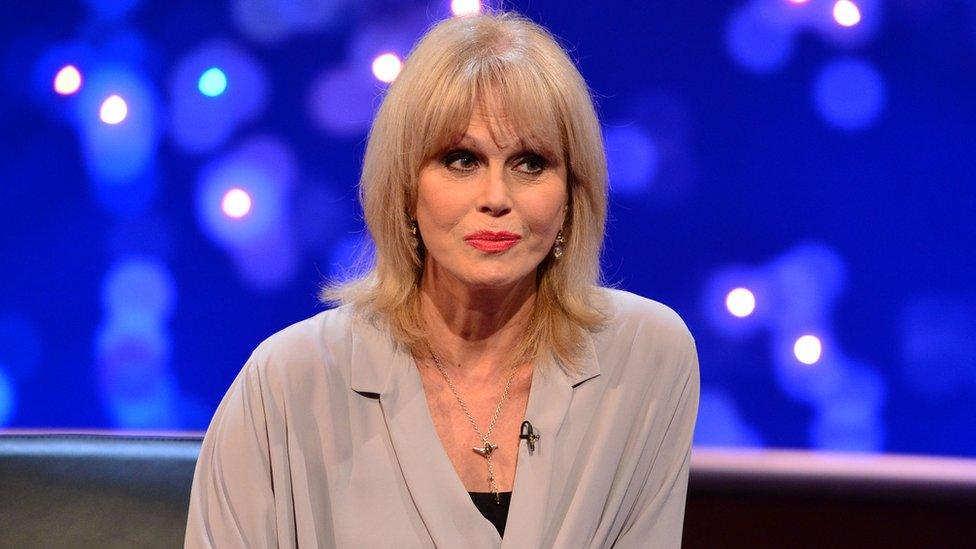
Lumley, by contrast, occupies a near-mythic place in British public life. Known not only for her acting career but also for her advocacy on issues such as refugee rights and the Gurkha justice campaign, she is widely admired for her calm, articulate, and compassionate public manner.
Place these two figures into a fictionalised confrontation, and the result is a ready-made morality play: power versus principle, noise versus dignity, establishment versus conscience.
The Appeal of the “Silent Takedown”
One striking feature of the viral story is its emphasis on silence. Lumley does not shout. She does not insult. She simply reads and responds. This reflects a growing appetite for what might be called the “quiet victory” narrative — moments where restraint is framed as strength and calm logic as the ultimate weapon.
In an era of performative outrage and constant online shouting, the idea of a composed figure dismantling an argument without raising their voice is deeply appealing. Whether or not such a moment happened almost becomes secondary to how much people want it to have happened.

The Risks of Fiction Presented as Fact
However satisfying the story may be, presenting it as real carries consequences. It risks unfairly misrepresenting both women. Accusing Kuenssberg of calling for someone to be “silenced” — without evidence — feeds into already polarised attitudes toward journalism. At the same time, attributing invented words and actions to Lumley turns her into a symbol rather than respecting her real, documented work and views.
This is how misinformation often operates in modern media ecosystems: not through obscure falsehoods, but through emotionally resonant stories that feel true enough to believe and share.
A Teachable Moment for Media Consumers

The viral “Kuenssberg vs Lumley” narrative is a useful reminder of the need for critical media literacy. Before sharing dramatic claims, especially those involving real people and alleged public statements, readers should ask basic questions: Is there a verifiable source? Has any reputable outlet reported this? Can the footage be found?
Admiring Joanna Lumley’s real-life advocacy does not require inventing confrontations. Critiquing Laura Kuenssberg’s journalism should be grounded in her actual reporting, not fictional tweets.
In the end, the silence that matters is not the one described in viral posts, but the pause we should all take before believing — and amplifying — a story simply because it feels emotionally satisfying.